msrx-usa.com
msrx-usa.com
The CAM rear takedown pins can provide positive correction, ranging from .002" to .008", to remedy those sloppy fitment issues that plague the AR platform, as well as neutral correction for those receivers that you need a hammer to seat the rear takedown pin. Please see below for advice in determining the amount of positive correction you may require. Our ideal fitment is when the upper and lower receivers just "hug up", like a soulful kiss, without undo effort to seat the rear takedown pin. There is sufficient elasticity within the aluminum receivers that you can "over-cam" by up to .002" if you prefer a tight(er) fitment.
A feeler gauge set is the the best method to determine the amount of correction that your AR requires. If you don't have feeler gauges, but do have a caliper or a micrometer, you can use those tools and some common materials as means to the same end. If you have a feeler gauge set, continue reading the instructions on the right. Otherwise, read below for alternatives.
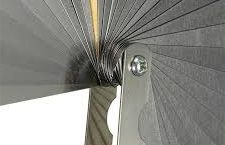
Place the thinnest blade of the feeler gauge set on the lower receiver as shown below and seat the takedown pin. If the blade moves freely, increase by .001" increments until the blade is difficult to move when the pin is seated. You can add .001" to .002" to the thickness indicated on the blade(s) if a tight(er) fit is preferred. The last number (.004, .007, etc) is your CAM pin number.
If you prefer a tighter fit, or unsure of exact gap, you can order a CAM pin up to .002" over actual gap size.
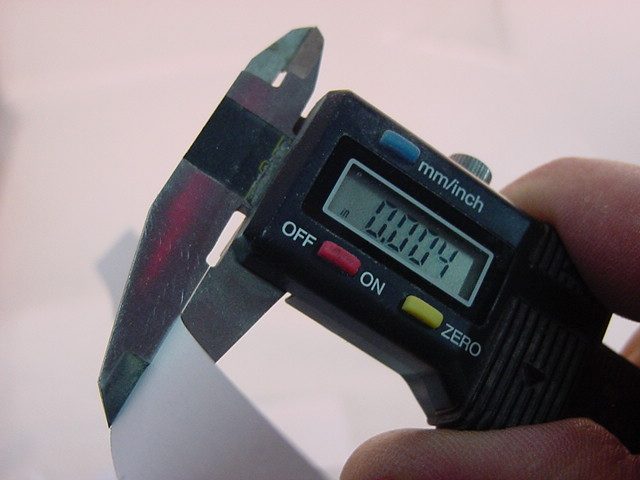
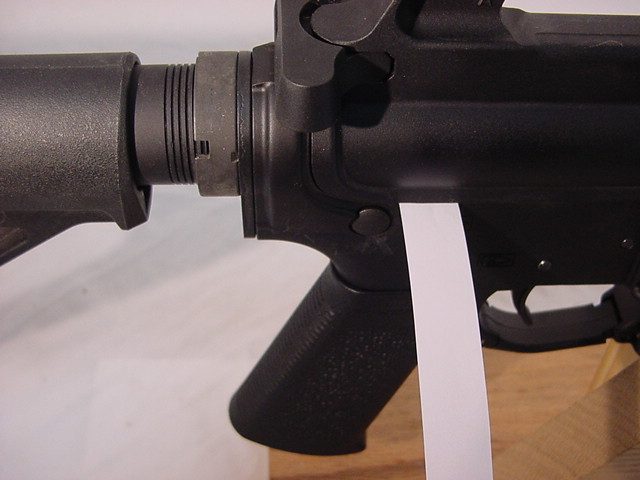
Typical printer paper is .0035" to .004" thick. If you have noticeable play between upper and lower, lay a 1/2" wide strip of printer paper between the receivers as shown and seat the takedown pin. If the strip of paper is held so tight that it won't move, the #4 CAM should do. If the strip fits snug, but can be removed with a firm tug, get the #5 CAM pin. If a single strip of paper is still loose, you are going to need more CAM.
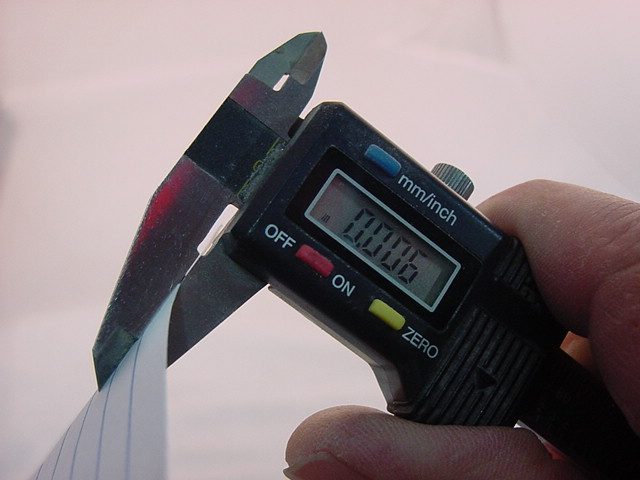
A standard 3x5 index card is about .006" thick. Follow the directions above, but with a 1/2" strip of index card rather than printer paper. If it fits tight when the takedown pin is seated, we suggest a #6 CAM. If snug, but still moves with a firm tug, order a #7 CAM
If one layer of printer paper isn't enough, double up. Two layers of printer paper measure .007" to .008", and .008" is about all the CAM you can get. If one strip of paper fits loosely when sandwiched between receivers, but it takes significant effort to seat the takedown pin when you add the second strip, the #6 CAM is likely the ticket. If you can seat the pin easily on two layers, but the paper is held fast between the receivers, order a #7. If the two strips move when the takedown pin is seated, the #8 CAM is in order and that is as much compensation as is possible.
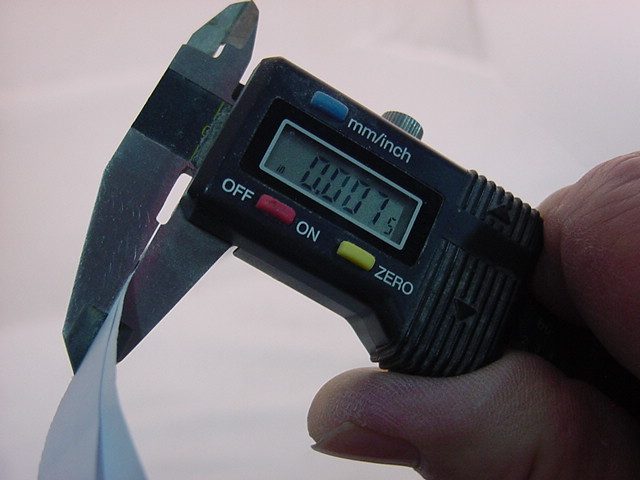
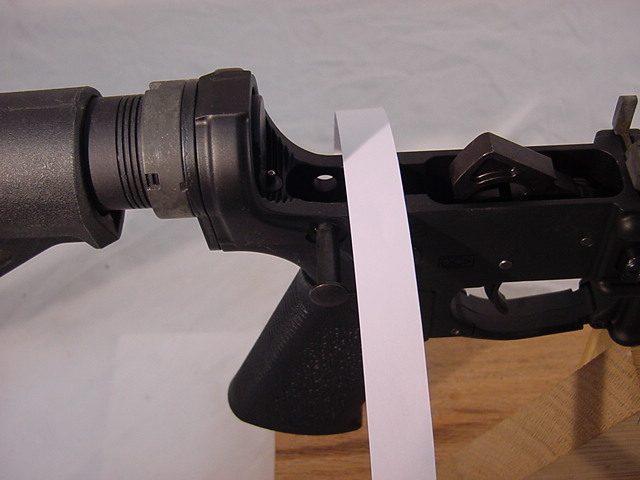
Place the instrument of measurement, whether a feeler gauge or alternative, slightly forward of the takedown pin area so that it clears the lug of the upper receiver when closed.
Close the upper receiver on the lower and seat the rear takedown pin. Follow the instructions as indicated above, relative to your particular measuring device.
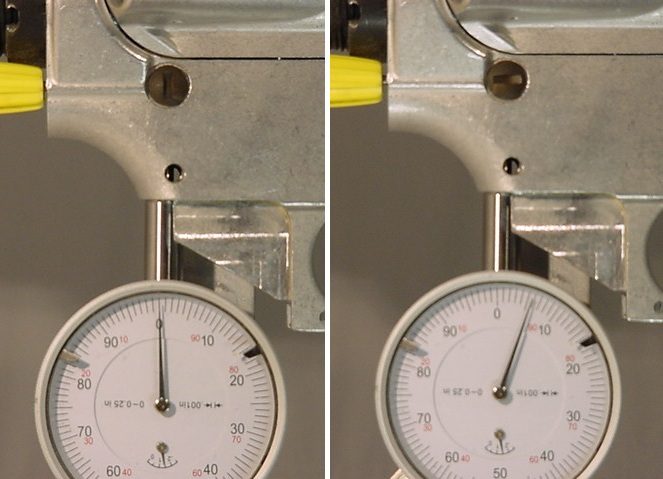
Every CAM is precisely manufactured and indicated within a tolerance of -.00025"/+.00075" to ensure accuracy and a proper fit. As is shown on the dial indicator, this example is a #6 CAM pin.
We need your consent to load the translations
We use a third-party service to translate the website content that may collect data about your activity. Please review the details in the privacy policy and accept the service to view the translations.